
Best Practices for Setting Up a Team-Based Social Media Strategy
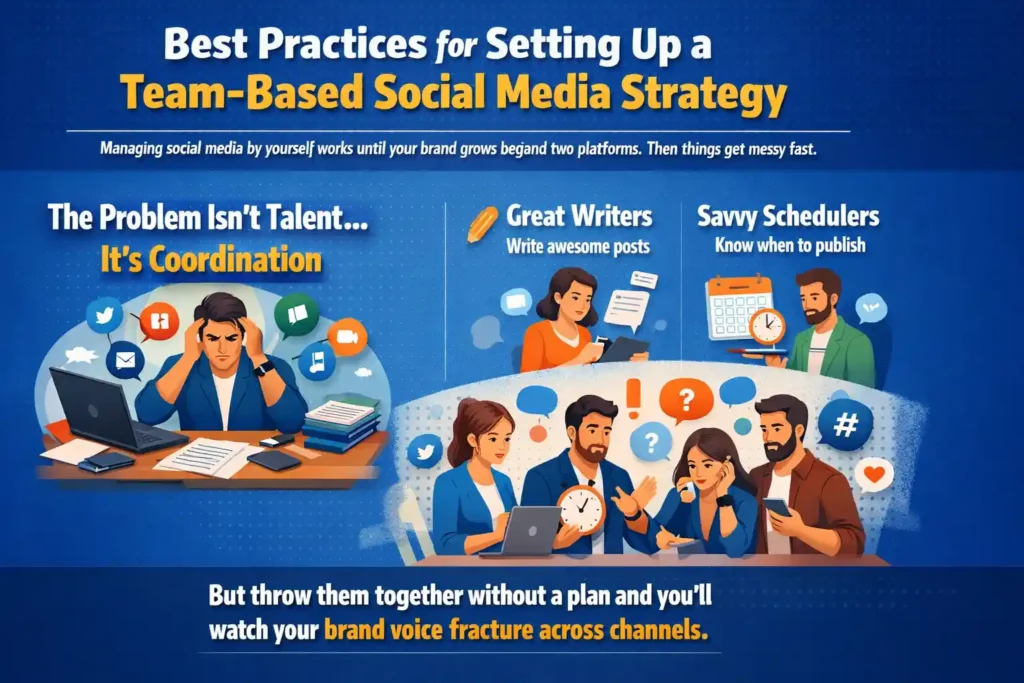
Managing social media by yourself works until your brand grows beyond two platforms. Then things get messy fast.
The problem isn’t talent. It’s coordination. You’ve got people who can write great posts and others who know exactly when to hit publish for maximum engagement. But throw them together without a plan and you’ll watch your brand voice fracture across channels.
Get Role Clarity Sorted First
Here’s what happens in most companies: leadership assumes the social team will “work it out among themselves.” Spoiler alert: they won’t. You need someone owning content creation, another person watching the comments section, and a third making sure nothing embarrassing goes live.
Map each responsibility to an actual person. Your writer shouldn’t have final approval authority (give that to your brand lead), and whoever runs analytics probably shouldn’t be crafting real-time responses to angry customers on Twitter.
Research from Pew found that 78% of workers using social media professionally say it strengthens workplace relationships. That only happens when people stay in their lanes. On Facebook specifically, this means knowing how to add admin to facebook page properly so everyone gets the right access level without stepping on each other’s toes.
Keep Your Approval Process Simple
Twelve approval steps will kill your content calendar. No approval steps will eventually kill your reputation. Find the middle ground.
Two or three stages works for most teams. Sprout Social’s data on approval workflows shows that fewer approvers means faster publishing and less frustration. Creator drafts it, reviewer checks brand fit, the publisher schedules it. Done.
Share One Calendar (Seriously, Just One)
Your Instagram person needs to know what’s going on over on LinkedIn. Otherwise you get the same product announcement posted five different ways on the same Tuesday afternoon.
Google Sheets handles this fine for smaller teams. Hootsuite or Buffer give you more bells and whistles if you need them. Color-code by platform or campaign so anyone can scan the week and understand what’s coming.
Leave some white space in your schedule. Trending topics don’t wait for your editorial calendar, and neither do customer service fires. The posts you didn’t plan often outperform the ones you spent weeks perfecting.
Write Brand Guidelines That People Actually Read
Your social voice can’t sound different depending on who’s posting or what time zone they’re in. Document the specifics: how formal, which words to avoid, whether emojis fly or die, how to handle trolls versus legitimate complaints.
Skip the vague advice. “Be authentic” means nothing. Show actual examples of posts that worked and ones that flopped. Screenshots help more than paragraphs of explanation.
Harvard Business Review makes the point that social media shouldn’t be siloed in marketing alone. Sales teams post. HR posts. Customer support definitely posts. Anyone representing your brand online needs the same playbook.
Meet Weekly, But Make It Quick
Monthly social media meetings are basically useless. The algorithm changed twice since your last one. Go weekly instead.
Cap it at 30 minutes. What performed well, what’s coming up, what’s blocking progress. That’s it. Save the big strategy conversations for quarterly reviews when you actually have enough data to make decisions.
Pick Tools That Match Your Reality
Three people don’t need a $500/month enterprise platform. Fifteen people can’t run on free tools and spreadsheets without someone losing their mind.
Pew Research Center found that 34% of employees hop on social media at work just for mental breaks. Good tools make the work itself less tedious. When scheduling takes 30 seconds instead of five minutes, your team spends energy on creative problems instead of administrative ones.
Brands that buy real Youtube views often integrate that decision into a broader content strategy, using stronger initial visibility to support high-quality videos while relying on consistent publishing and audience engagement for sustainable growth.
Look for role-based permissions, mobile apps that actually work, and integrations with whatever else your marketing stack includes. The fanciest tool means nothing if nobody uses it.
Track Numbers That Move the Business
Likes feel nice. They don’t pay for anything.
Pick three to five metrics tied to real business goals. Brand awareness campaigns should track reach. Lead gen campaigns need click-through rates and conversions. Choose numbers your team can actually influence with their daily work.
Share performance data with everyone, not just managers. When your content creator sees that last month’s posts drove 200 email signups, they approach the next campaign with different energy than someone who only ever sees vanity metrics.